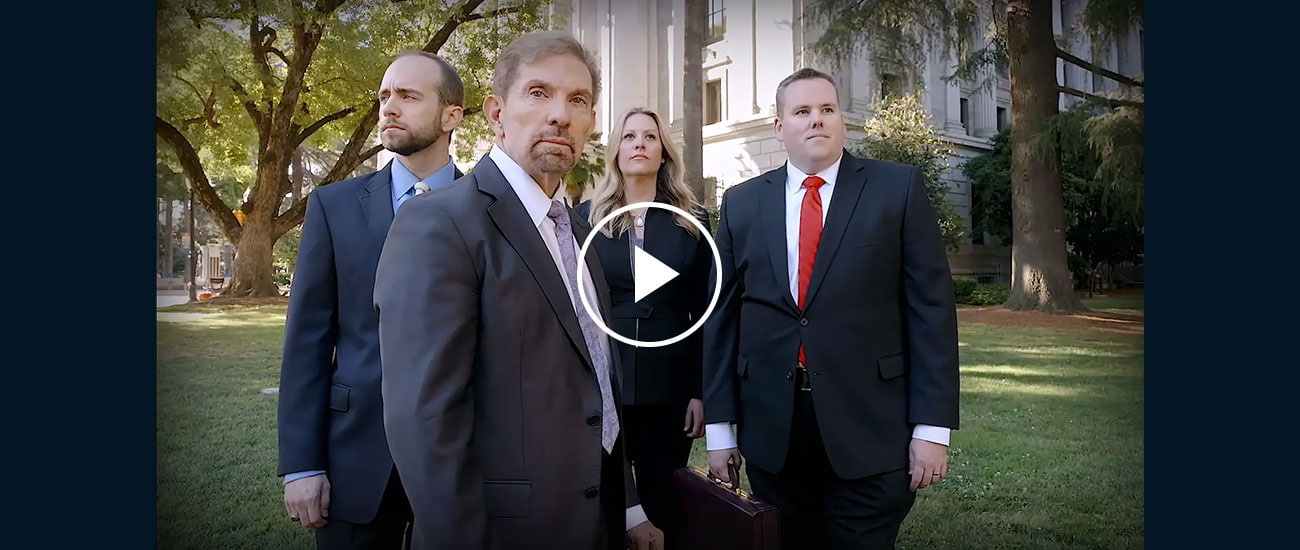
Many people are injured due to medical malpractice every year, but, sadly, far too few ever seek a lawyer's help. In fact, it has been estimated that 85% of people injured due to medical malpractice never filed a claim. According to an article recently published in the Journal of the American Medical Association, more than 180,000 people die each year due to medical mistakes. This has become one of the leading causes of death in United States after deaths from heart disease and cancer. If you have been seriously injured or have lost a loved one due to medical malpractice, we are ready to help you.

- Attorney Moseley Collins

July 27, 2010

Permanent Injuries Suffered During Child's Birth Lead To Sacramento Malpractice Suit, Part 7 of 8

(Please note: the names and locations of all parties have been changed to protect the confidentiality of the participants in this personal injury case and its proceedings.)

It is also worth noting that situations similar to those described in this medical malpractice case could just as easily occur at any of the healthcare facilities in the area, such as Kaiser Permanente, U.C. Davis Medical Center, Mercy, or Sutter.

Another way of putting the defense's self consumption reduction would be to state the defense was asking a jury to speculate about an injured plaintiff's prospective personal living expenses during the lost years period. (Id.) This the Court of Appeals refused to do. For more information you are welcome to contact Sacramento personal injury lawyer, Moseley Collins.

And the Court of Appeal had a second reason to reject the "self consumption" reduction: Second, and equally troubling, [Defendant] does not identify any case which applies a personal consumption or living expense deduction in this context. (Id. at p. 176.) In other words, the defense has no case authority. The defense argued such a deduction is made in wrongful death cases. But again, the Court of Appeal rejected the argument. The Court acknowledged that in wrongful death actions, an acceptable way to show how much money would have been available for the support of a decedent's wife and children is to show how much money would have been earned during the remainder of his life, and to deduct from that amount his personal maintenance expense and the amount he would have spent on other things. (Id. at p. 176.)

However - - By contrast, in a personal injury action where lost years damages are recoverable, the measure of damages is not lost support but rather lost earnings during the period the plaintiff would have lived if not for the injury. (Fein. supra, 38 Cal.3d at p. 153. Speculating as to how the injured party may have spend those future earnings if not for defendant's tortuous conduct is a very different exercise than permitting a wrongful death plaintiff to prove damages for lost support by accounting for his or her supporter's other expenses. (Overly, supra, 74 Cal.App.4th at p. 176.)

Continue reading "Permanent Injuries Suffered During Child's Birth Lead To Sacramento Malpractice Suit, Part 7 of 8" »

Bookmark and Share

July 21, 2010

Birth-Injured Sacramento Child Sues For Permanent Injuries Caused By Malpractice, Part 4 of 8

(Please note: the names and locations of all parties have been changed to protect the confidentiality of the participants in this personal injury case and its proceedings.)

It is also worth noting that situations similar to those described in this medical malpractice case could just as easily occur at any of the healthcare facilities in the area, such as Kaiser Permanente, U.C. Davis Medical Center, Mercy, or Sutter.

THE SUPREME COURT REFUSED TO APPLY PERIODIC PAYMENTS BASED ON THE CONCEPT OF "LOST YEARS"

The Fein Court found that the periodic payments of Code of Civil Procedure section 667.7 applied to medical negligence actions and found the application of periodic payments to be mandatory. However, the Supreme Court refused to apply periodic payments to lost years. For more information you are welcome to contact Sacramento personal injury lawyer, Moseley Collins.

Although in general lost earnings are a type of future damage particularly suitable to a periodic payment judgment, this case presents a somewhat unusual situation because the damages awarded are solely attributable to the earnings of plaintiff's lost years. If the trial court had ordered such damages paid periodically over the time period when the loss was expected to be incurred, the damages would have been paid in their entirety after plaintiff's expected death, and thus-if the life expectancy predictions were accurate-plaintiff would not have received any of this element of damages. (Fein v. Permanente Medical Group, supra, 38 Cal.3d at 156.)

Therefore, it is clear from the language of Fein that the purpose of "lost years" damages is make sure that the plaintiff receives all of their lost future earnings in a lump sum during their lifetime. (Accord Schiembeck v. Haight (1992) 869 Cal.App.4th 869, 778.)

Continue reading "Birth-Injured Sacramento Child Sues For Permanent Injuries Caused By Malpractice, Part 4 of 8" »

Bookmark and Share

July 17, 2010

Birth Injuries Caused By Sacramento Physicians' Malpractice, Part 3 of 8

(Please note: the names and locations of all parties have been changed to protect the confidentiality of the participants in this personal injury case and its proceedings.)

It is also worth noting that situations similar to those described in this medical malpractice case could just as easily occur at any of the healthcare facilities in the area, such as Kaiser Permanente, U.C. Davis Medical Center, Mercy, or Sutter.

THE MINOR PLAINTIFF IS ENTITLED TO A "LOST YEARS" JURY INSTRUCTION

The California Supreme Court specifically allows for a lost years instruction:

Under the prevailing American rule, a tort victim suing for damages for permanent injuries is permitted to base his recovery on his prospective earnings for the balance of his life expectancy at the time of his injury undiminished by any shortening of that expectancy as a result of the injury. ... Although, to our knowledge, the lost years issue has not been previously decided in California, recovery of such damages is consistent with the general rule permitting an award based on the loss of future earnings a plaintiff is likely to suffer because of inability to work for as long a period of time in the future as he could have done had not sustained the accident. (Emphasis in original and added.) (Fein v. Permanente Medical Group (1985) 38 Cal.3d 137, 153.)

Consequently, the minor plaintiff will be asking the court to issue an instruction on lost years damages. For more information you are welcome to contact Sacramento personal injury lawyer, Moseley Collins.

And in August 1999, the First District discussed the latest defense attack on the lost years damage award in Overly v. Ingalls Shipbuilding, Inc. (1999) 74 Cal.App.4th 164, 175. In Overly, Plaintiff sued for personal injury for exposure to asbestos - and Plaintiff claimed the loss of future economic benefits that [Plaintiff] would have earned during the period by which his life expectancy was shortened, i.e., 'lost years' damages, in the form of pension, social security and household services' benefits. (Id. at p. 171.)

Continue reading "Birth Injuries Caused By Sacramento Physicians' Malpractice, Part 3 of 8" »

Bookmark and Share

July 13, 2010

Sacramento Boy Suffers Permanent Injuries Due To Doctors' Malpractice, Part 2 of 8

(Please note: the names and locations of all parties have been changed to protect the confidentiality of the participants in this personal injury case and its proceedings.)

It is also worth noting that situations similar to those described in this medical malpractice case could just as easily occur at any of the healthcare facilities in the area, such as Kaiser Permanente, U.C. Davis Medical Center, Mercy, or Sutter.

The later case of Hurlbut has affirmed that lost years are not subject to periodic payments. Later authority has affirmed that the lost years award is an exception to the rule of periodic payments under Civil Procedure section 667.7 (Hurlbut v. Sonora Community Hospital (1989) 207 Cal. App.3d 388.) For more information you are welcome to contact Sacramento personal injury lawyer, Moseley Collins.

California has now rejected the defense argument of saved costs of necessities. The "lost years" should not be reduced by the "saved cost of necessities." Defense counsel may argue that the "lost years" award should be reduced by the amount saved because of a reduced life expectancy. The First District has now held the majority view is that no deduction is made for the injured part's expected living expenses during the lost years. (Overly, supra, 74 Cal.App.4th at p. 175.) No court has endorsed the approach that would deny lost years damages because it is the widespread practice to award the plaintiff full compensation for his lost years damages (Fleming, The Lost Years: A Problem in the Computation and Distribution of Damages (1962) 50 Cal.L.Rev. 598). (See Part 3 of 8.)

Continue reading "Sacramento Boy Suffers Permanent Injuries Due To Doctors' Malpractice, Part 2 of 8" »

Bookmark and Share

July 8, 2010

Sacramento Family Files Suit For Medical Malpractice, Part 1 of 8

(Please note: the names and locations of all parties have been changed to protect the confidentiality of the participants in this personal injury case and its proceedings.)

It is also worth noting that situations similar to those described in this medical malpractice case could just as easily occur at any of the healthcare facilities in the area, such as Kaiser Permanente, U.C. Davis Medical Center, Mercy, or Sutter.

PLAINTIFFS' TRIAL BRIEF ON "LOST YEARS" AND "SAVED COST OF NECESSITIES"

MEMORANDUM OF POINTS AND AUTHORITIES

INTRODUCTION

The medical malpractice case at issue involves severe and permanent neurological injuries suffered by minor Owen Smith, at or around the time of his birth on February 21, 2000.

There will be expert testimony that the minor will never be employed. Because the minor will not be able to work, she is entitled to damages described as lost years - i.e. the time by which a plaintiff's work life expectancy is shortened because of the injury. For more information you are welcome to contact Sacramento personal injury lawyer, Moseley Collins.

The minor is entitled to a "lost years" jury instruction. The Supreme Court specifically addressed the issue of "lost years”; where a plaintiff's work life expectancy is shortened, this loss is compensable (Fein v. Permanente Medical Group (1985) 38 Cal.3d 137). And in August 1999, the First District reaffirmed the "lost years" damage award: Fein expressly recognized a right to recover damages for the loss of prospective earnings during the period of time by which the plaintiff's life expectancy has been diminished. (Overly v. Ingalls Shipbuilding, Inc. (1999) 74 Cal.App.4th 164, 172.)

Continue reading "Sacramento Family Files Suit For Medical Malpractice, Part 1 of 8" »

Bookmark and Share

June 25, 2010

Sacramento Man Left Disabled Due To Surgical Malpractice, Part 8 of 8

The following blog entry is written from a defendant’s position as trial approaches. Reviewing this kind of briefing should help potential plaintiffs and clients better understand how parties present such issues to the court.

(Please note: the names and locations of all parties have been changed to protect the confidentiality of the participants in this medical malpractice/personal injury case and its proceedings.)

Expert Review of the Instant Case Establishes that the Conduct of Dr. Lee Did Not Cause Plaintiff's Alleged Injuries.

In a personal injury action, causation must be proven within a reasonable medical probability based on competent expert testimony. Mere possibility alone is insufficient to establish a prima facie case. Jones v. Ortho Pharmaceutical Company (1985) 163 Cal.App.3d 396, 402 02 (citations omitted); Dumas v. Conney (1991) 235 Cal.App.3d 1593, 1603. Liability for medical malpractice is predicated upon a proximate causal connection between the negligent conduct and the resulting injury. Budd v. Nixon (1971) 6 Cal.3d 195,200. In Dumas, the court declined to establish a more lenient standard of causation in medical malpractice cases to account for the theory of lost chance:

Relaxing the causation requirement might correct a perceived unfairness to some plaintiff who could prove the possibility of the medical malpractice cause and injury but could not prove the probability of causation, but at the same time could create injustice. Health care providers could find themselves defending cases simply because a patient fails to improve or where serious disease processes are not arrested because another course of action could possibly bring a better result.

Continue reading "Sacramento Man Left Disabled Due To Surgical Malpractice, Part 8 of 8" »

Bookmark and Share

June 17, 2010

Sacramento Man Suffers Multiple Injuries Due To Medical Malpractice, Part 7 of 8

The following blog entry is written from a defendant’s position as trial approaches. Reviewing this kind of briefing should help potential plaintiffs and clients better understand how parties present such issues to the court.

(Please note: the names and locations of all parties have been changed to protect the confidentiality of the participants in this medical malpractice/personal injury case and its proceedings.)

Additionally, it is well settled that:

California courts have incorporated the expert evidence requirement into their standard for summary judgment in medical malpractice cases. When a defendant moves for summary judgment and supports his motion with expert declarations that his conduct fell within the community standard of care, he is entitled to summary judgment unless the plaintiff comes forward with conflicting expert evidence. Munro v. Regents of the University of California, supra, 215 Cal.App.3d at pp. 984-985 (quoting Hutchinson v. United States (1988) 838 F.2nd 390.) [Emphasis added.]

Expert Review of the Instant Case Establishes that the Conduct of Dr. Lee Was Within the Community Standard of Care.

The instant case is a medical malpractice action involving allegations which are beyond a layman's knowledge. Thus, under Landeros and Munro, whether or not the care ar d treatment rendered by Dr. Lee was within the standard of care is a matter exclusively with: In the province of expert testimony. Therefore, Dr. Lee supports his motion with an expert declaration from Robert White, M.D. establishing that the care and treatment rendered by him was within t he standard of care for a vascular surgeon.

Continue reading "Sacramento Man Suffers Multiple Injuries Due To Medical Malpractice, Part 7 of 8" »

Bookmark and Share

June 9, 2010

Physicians and Surgeons From Sacramento Hopsital Must Defend Malpractice Action, Part 6 of 8

The following blog entry is written from a defendant’s position as trial approaches. Reviewing this kind of briefing should help potential plaintiffs and clients better understand how parties present such issues to the court.

(Please note: the names and locations of all parties have been changed to protect the confidentiality of the participants in this medical malpractice/personal injury case and its proceedings.)

UNCONTRADICTED EXPERT TESTIMONY ESTABLISHES THAT THE CARE AND TREATMENT RENDERED BY DR. LEE WAS WITHIN THE STANDARD OF CARE AND DID NOT CAUSE PLAINTIFF'S ALLEGED INJURIES

The Accepted Standard of Care in Medical Malpractice Actions Must Be Established By Qualified Experts.

In a medical malpractice action based on professional negligence, a plaint must establish the duty of the professional to use such skill, prudence, and diligence as other members of the profession commonly possess and exercise; a breach of that duty; a proximate causal connection between the negligent conduct and the resulting injury; and actual loss or damage resulting from the professional's negligence. Turpin v. Sortini (1982) 31 Cal.3d 220, 229-230. When the defendant is accused of failing to adhere to accepted standards of practice, such standards may be established only by qualified expert testimony. Stephenson v. Kaiser Foundation Hospital (1961) 203 Cal.App.2d 631, 635.

Specifically, the inherent nature of a medical malpractice action, along with the applicable standards of care, involve subject matter that is beyond the competency of laymen to address and therefore, must be addressed by a qualified expert. Landeros v. Flood (1976) 17 Cal.3d 399, 410.

Continue reading "Physicians and Surgeons From Sacramento Hopsital Must Defend Malpractice Action, Part 6 of 8" »

Bookmark and Share

June 2, 2010

Sacramento Hospital Sued For Medical Malpractice, Part 5 of 8

The following blog entry is written from a defendant’s position as trial approaches. Reviewing this kind of briefing should help potential plaintiffs and clients better understand how parties present such issues to the court.

(Please note: the names and locations of all parties have been changed to protect the confidentiality of the participants in this medical malpractice/personal injury case and its proceedings.)

SUMMARY JUDGMENT IS APPROPRIATE WHEN THERE IS NO TRIABLE ISSUE AS TO ANY MATERIAL FACT

California Code of Civil Procedure Section 437(c)(f) provides authority for the grant of summary judgment if a party contends the cause of action (for medical malpractice) has no merit.

The entry of summary judgment is mandatory where the documents disclose no triable issue of material fact. Kraslev v. Superior Court (1980) 101 Cal.App.3d 425, 432. A defendant is entitled to summary judgment where the record establishes, as a matter of law that a cause of action asserted against him cannot prevail. County of Los Angeles v. Security Insurance Comparny of Hartford (1975) 52 Cal.App.3d 808, 816.

A defendant has met his or her burden of showing that a cause of action has no merit if that party has shown that one or more elements of the cause of action cannot be established. (Code Civ. Proc. §437c(o)(2)) Once the defendant has met that burden, the burden shifts to the plaintiff to show that a triable issue of one or more material facts exist is to that cause of action. Munro v. Regents of University of California (1989) 215 Cal.App.3d 977. In Fraser Dame, etc. v. Bacarro Blum, etc. (1977) 70 Cal.App.3d 331, 338, the court stated:

Continue reading "Sacramento Hospital Sued For Medical Malpractice, Part 5 of 8" »

Bookmark and Share

May 31, 2010

Botched Procedures By Sacramento Surgeons Subject Of Lawsuuit, Part 4 of 8

The following blog entry is written from a defendant’s position as trial approaches. Reviewing this kind of briefing should help potential plaintiffs and clients better understand how parties present such issues to the court.

(Please note: the names and locations of all parties have been changed to protect the confidentiality of the participants in this medical malpractice/personal injury case and its proceedings.)

Approximately one year after his discharge, on or about August 31, 2007, plaintiff filed the instant lawsuit for medical negligence and failure to inform against several defendant, including Dr. Lee. Specifically he claims that Dr. Lee assumed responsibility to locate and repair injuries caused by Dr. Green during the laparoscopic cholecystectomy on June 16, 2006, but failed to do so necessitating cardiac resuscitation and subsequent exploratory laparatomy and bowel repair surgeries.

The expert testimony of Dr. White refutes the suggestions that Dr. Lee's treatment of plaintiff fell below the standard of care or that it caused any alleged injuries. Nevertheless, plaintiff has initiated this lawsuit against Dr. Lee, claiming damages according to proof at trial. In order to prevail on his claim for damages against Dr. Lee, he must demonstrate that the care and treatment rendered to him by Dr. Lee fell shy of the applicable standard of care.

Defendant Dr. Lee brings this motion on the following grounds:

1) The cause of action for medical negligence/failure to provide informed c onsent against this moving defendant lacks merit because the care and treatment rendered to Sean Black by vascular surgeon Dr. Lee was within the standard of care at all times.

Continue reading "Botched Procedures By Sacramento Surgeons Subject Of Lawsuuit, Part 4 of 8" »

Bookmark and Share

May 27, 2010

Family Of Sacramento Man Sue For Medical Malpractice, Part 3 of 8

The following blog entry is written from a defendant’s position as trial approaches. Reviewing this kind of briefing should help potential plaintiffs and clients better understand how parties present such issues to the court.

(Please note: the names and locations of all parties have been changed to protect the confidentiality of the participants in this medical malpractice/personal injury case and its proceedings.)

On June 28, 2006, Dr. Stuart placed a central venous catheter and an arterial catheter in Plaintiffs right groin due to hypotension. A bedside exploratory laparatomy was performed in the ICU by Dr. Green, with the assistance of Dr. Smith. During the procedure a major hemoperitoneum with fresh and active clot, as well as generalized oozing, was observed. Plaintiff was actively bleeding so he was transported to the operating room for another exploratory laparatomy by Green, with the assistance of Dr. Smith and Dr. Lee. A posterior laceration of the bifurcation of the abdominal aorta and an anterior wall laceration directly beneath the first wound of the first common iliac vein were four d. Both lacerations were repaired with sutures. The abdomen was again left open after this procedure.

On June 30, 2006, plaintiff underwent another exploratory laparotomy and washout at the hands of Dr. Green. There was no evidence of infectious collections or intra-loo abscesses and all bowel and viscera were completely viable. On July 3,2006, Dr. Green closed plaintiff's abdomen. Thereafter plaintiff's recovery was pretty uneventful until the time of his discharge on July 21,2006.

Continue reading "Family Of Sacramento Man Sue For Medical Malpractice, Part 3 of 8" »

Bookmark and Share

May 24, 2010

Sacramento Physicians Sued For Medical Malpractice, Part 2 of 8

The following blog entry is written from a defendant’s position as trial approaches. Reviewing this kind of briefing should help potential plaintiffs and clients better understand how parties present such issues to the court.

(Please note: the names and locations of all parties have been changed to protect the confidentiality of the participants in this medical malpractice/personal injury case and its proceedings.)

On or about June 19, 2006, plaintiff experienced respiratory distress and underwent a CT pulmonary angiogram which revealed a large right pulmonary arterial embolus. An IVC filter was placed by radiologist Dr. Rich without complications.

On June 24, 2006, plaintiff experienced a profound drop in blood pressure and bright red blood was noted to be coming from his NG tube. He continued to have trouble breathing and a code blue was called. Advanced cardiac life support was started and plaintiff was transfused with fresh-frozen plasma. Dr. Lee was doing rounds of the ICU unit and noted plaintiff was actively bleeding and in shock with critical blood pressure. Dr. Lee placed resuscitation lines in plaintiff's groin, at his bedside. Specifically, he placed a femur arterial line to allow for monitoring of blood pressure, and a femoral venous line to allow for rapid blood infusion.

Gastroenterologist Dr. Sandrina Ward was called to see plaintiff emergently and conducted an upper endoscopy in an attempt to locate the bleeding source. The endoscopy revealed large amounts of clot within the stomach and duodenum, however, no obvious ulcers or source of bleeding could be found. Plaintiff was then taken to the operating room for an exploratory surgery. The surgery was performed by Dr. Green with the assistance of Dr. Lee. It was discovered that plaintiff had a large hemoperitoneum, the majority of which comprised an old clot in the mid portion of his abdomen and pelvis.

Continue reading "Sacramento Physicians Sued For Medical Malpractice, Part 2 of 8" »

Bookmark and Share